
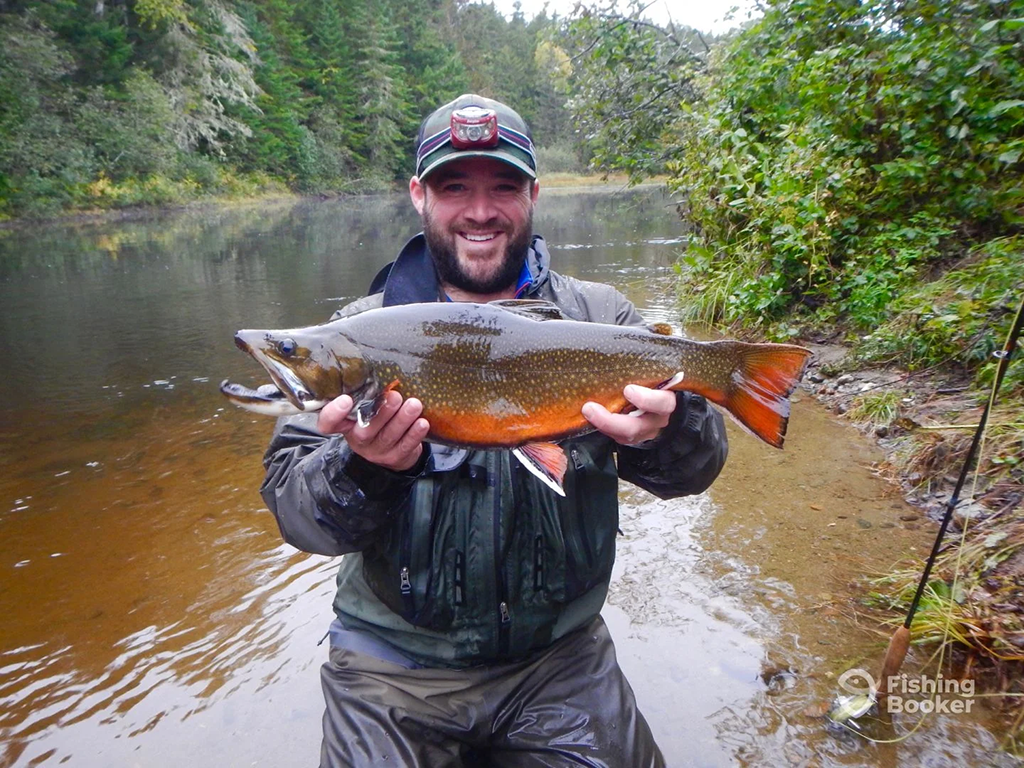
Brook Trout and Lake Trout: Cold-Water Icons of North American Freshwaters
Brook trout and lake trout are two of the most iconic cold-water fish species found in North America. Both belong to the salmonid family, which also includes bigfishmccall.com salmon and whitefish, and they are highly valued by anglers, ecologists, and conservationists alike. Despite sharing a family and similar habitats, these two species differ significantly in behavior, appearance, and ecological roles.
Brook Trout: The Jewel of Clear Streams
The brook trout (Brook trout) is often considered one of the most beautiful freshwater fish in the world. It is native to eastern North America, particularly the United States and Canada, where it thrives in cold, clean, oxygen-rich streams, rivers, and small lakes.
Brook trout are easily recognized by their dark green to brownish body, marbled with a worm-like pattern known as vermiculation. Their sides are decorated with red and orange spots surrounded by pale blue halos, making them especially striking in clear water.
Ecologically, brook trout are very sensitive to environmental change. They require pristine water conditions and are often one of the first species to disappear when pollution, deforestation, or rising water temperatures affect a habitat. Because of this, they are considered an important indicator species for freshwater ecosystem health.
From a behavioral standpoint, brook trout tend to be territorial and relatively small compared to other trout species. They feed on insects, small crustaceans, and aquatic larvae, often rising to the water’s surface to feed during hatches, which makes them a favorite target for fly fishers.
Lake Trout: The Deep-Water Giant
In contrast, the lake trout (Lake trout) is a large, deep-water predator native to northern North America, especially in Canada, Alaska, and the Great Lakes region. Unlike brook trout, lake trout prefer deep, cold lakes where they spend most of their lives below the surface.
Lake trout have a more subdued appearance, typically dark gray or greenish with light spots scattered across their bodies. They can grow to impressive sizes, often exceeding 20 kilograms (44 pounds) in ideal conditions, making them one of the largest freshwater trout species in the world.
As apex predators in many lake ecosystems, lake trout feed on smaller fish such as whitefish, smelt, and young trout. Their role is crucial in maintaining ecological balance in deep lake environments. Because they inhabit colder, deeper waters, they are less visible than brook trout and are often harder to catch.
Habitat Differences and Adaptations
While both species prefer cold water, their habitats differ significantly. Brook trout are typically found in shallow, fast-moving streams and small lakes with abundant cover like rocks and vegetation. Lake trout, on the other hand, inhabit deep, stratified lakes where temperatures remain cold year-round.
These differences have shaped their biology and behavior. Brook trout are adapted for quick movements in flowing water, while lake trout are built for endurance and deep-water hunting. Their spawning behaviors also differ: brook trout spawn in gravel beds in streams during fall, while lake trout spawn in deeper lake areas, often over rocky substrates.
Importance in Ecosystems and Recreation
Both brook trout and lake trout play important roles in freshwater ecosystems and are highly valued in recreational fishing. They attract anglers from around the world, contributing significantly to local tourism in regions where they are found.
Conservation efforts are especially important for brook trout populations, as they are more vulnerable to habitat loss and climate change. Lake trout populations have also faced challenges, particularly in the Great Lakes, but successful restoration programs have helped many stocks recover.
Together, these two species represent the diversity and beauty of cold-water ecosystems, showcasing how fish can evolve differently even within the same family to adapt to distinct environments.
 shelbycowart75
 hattie5585
 lilly4173499